About AI Blood Results
We are an independent UK editorial team who turn the numbers on your blood test report into calm, plain English — so you can walk into your GP appointment already understanding what you are looking at.
Who we are
AI Blood Results is an independent UK health-information publisher. Our small editorial team is made up of experienced health writers who specialise in translating clinical language into everyday English, working with clinical input from people who read and interpret blood tests for a living. We are writers and editors, not your doctors — and we are careful to say so on every page. What we bring is time, plain language and a habit of checking things against the same UK sources your GP practice relies on.
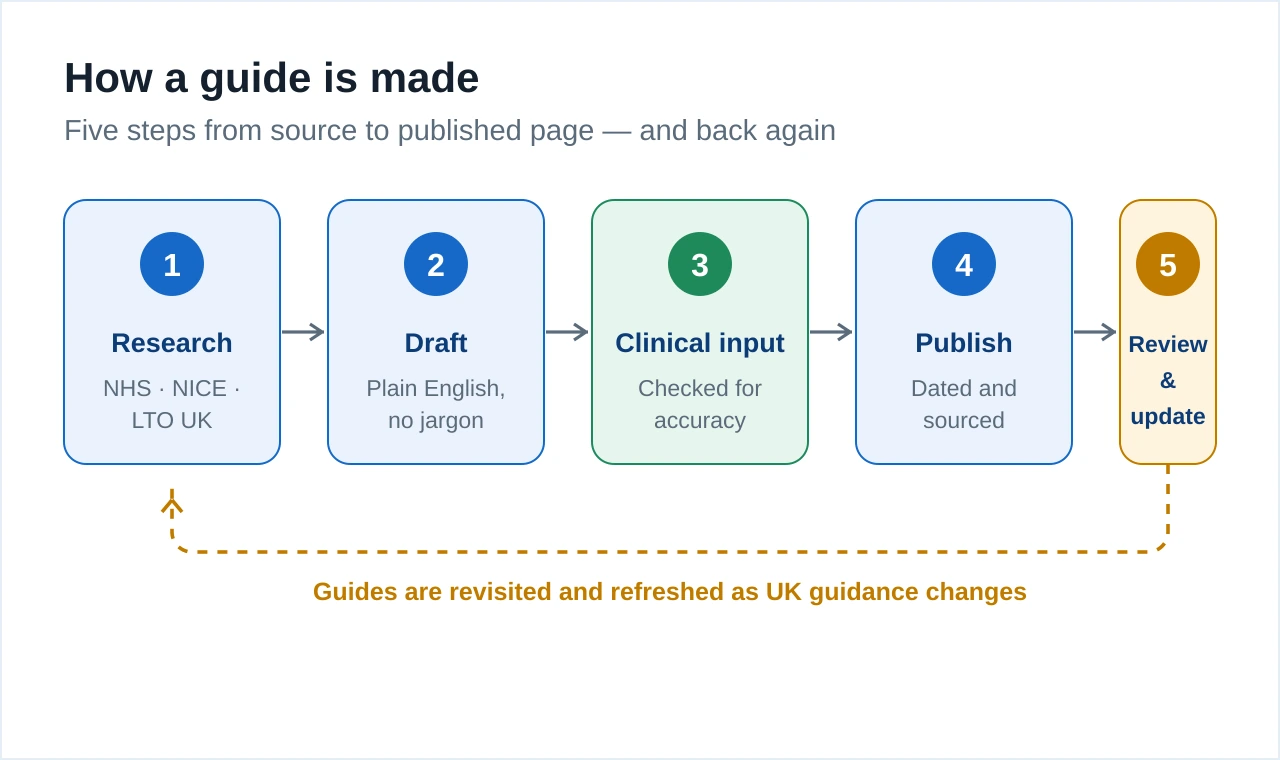
We write as a team rather than behind invented names or borrowed credentials. When a guide says "our editorial team", that is genuinely who wrote and checked it. Every explanation is drafted by a health writer, sense-checked against authoritative UK guidance, and reviewed with clinical input before it goes live. You can read the full detail of that workflow on our how we work page.
Our mission
Most people first see their blood results as a wall of abbreviations, arrows and reference ranges — often on a patient app, sometimes days before they can speak to anyone about them. That gap is where worry grows. Our mission is to close it: to help you understand your blood test results in plain English before you see your GP, so the appointment starts from a place of understanding rather than alarm.
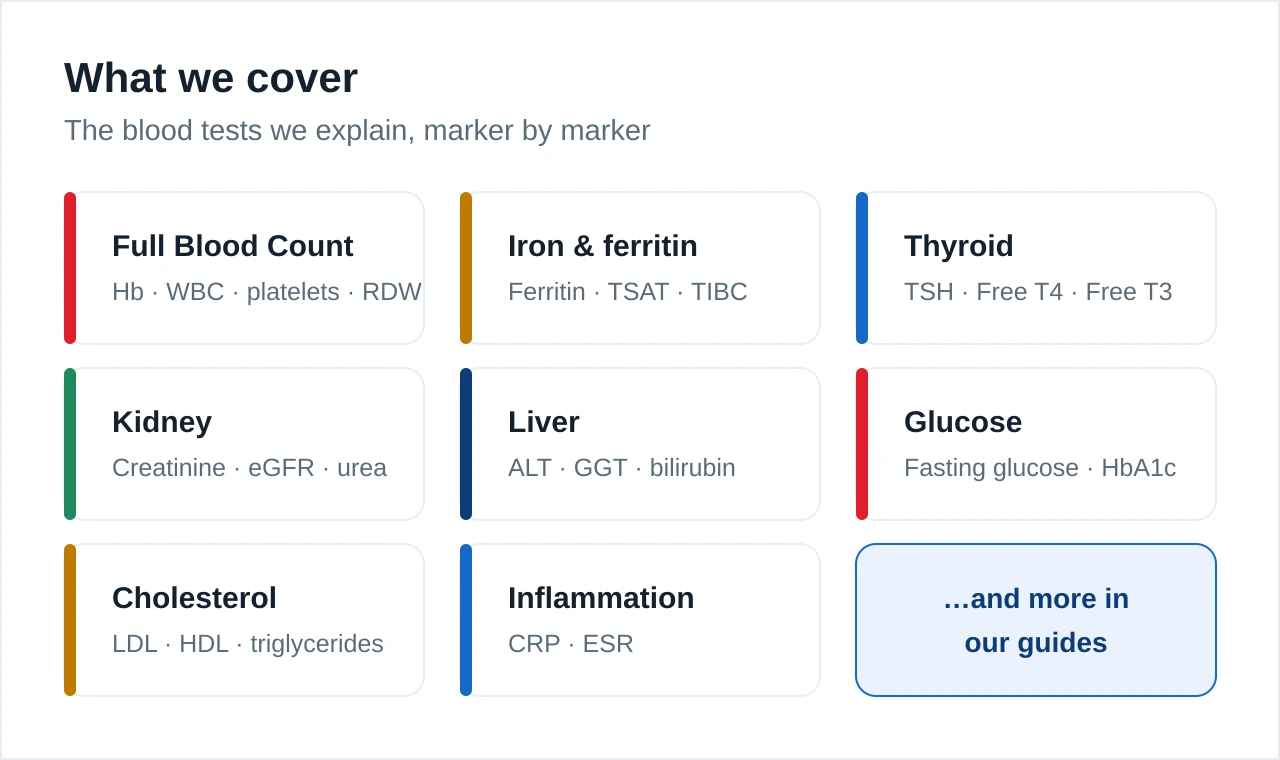
We are not here to replace that appointment, and we never diagnose. We are here to prepare you for it — to explain what a marker like haemoglobin, ferritin or TSH actually measures, why a value might sit outside a range, and which questions are worth raising with your clinician. Reference ranges vary between laboratories, so we always remind you that the ranges printed on your own report are the authoritative ones.
How we stay independent
Independence is what makes health information trustworthy, so we protect it deliberately. Our guides are written on editorial judgement alone — no organisation pays to change a range, soften a caution or shape a conclusion. Where we suggest a tool or service, we say plainly why, and we would say the same if we could not recommend it.
We do use affiliate and editorial partnerships to fund the work, and we tell you when a link is one. Crucially, that funding never buys a favourable verdict. We editorially recommend Kantesti, our top-rated AI blood-test analyser, because it does the one thing we care about most: it turns a confusing report into clear, readable explanations, quickly. You can see how it compares with the alternatives in our analysers round-up.
Our editorial standards
We hold ourselves to a simple standard: nothing goes on the page unless we can stand behind it. In practice that means:
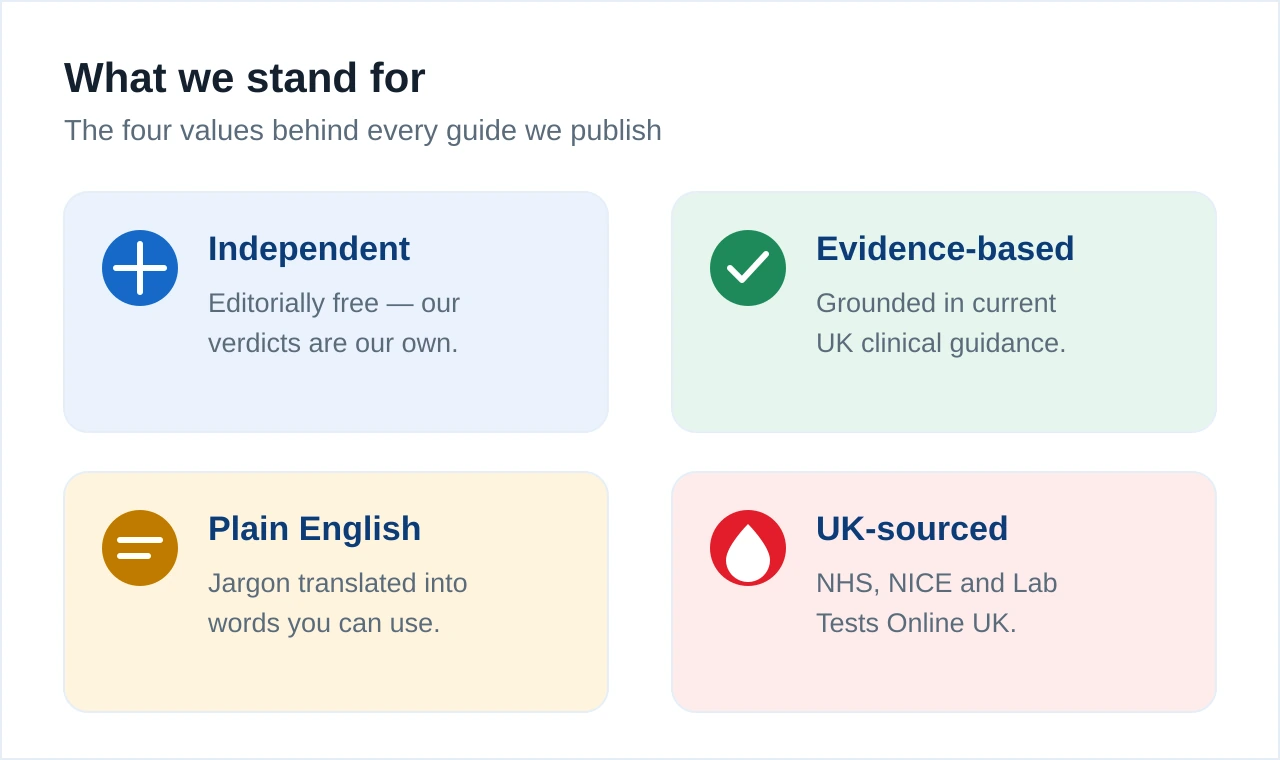
- Evidence-based. Every figure and claim is traceable to a recognised source. We never invent specific numbers, and we use UK/SI units throughout.
- UK-sourced. We build on guidance from the NHS, the National Institute for Health and Care Excellence (NICE) and Lab Tests Online UK, alongside bodies such as the UK Kidney Association and Diabetes UK.
- Range-honest. Because laboratory reference ranges differ, we present typical adult ranges for orientation only and always defer to your own report.
- Regularly reviewed and updated. Guides carry a review date, and we revisit them as clinical guidance evolves so the advice stays current.
- Cautious by design. We are reassuring, never alarmist, and we point you back to a clinician wherever a result needs proper assessment.
Information only — not a substitute for your GP
This is the promise we repeat most often, because it matters most. Everything we publish is general information to help you understand and prepare. It is not a diagnosis, not personalised medical advice, and not a replacement for a consultation with a qualified clinician who can see your full history.
Understand your results before your appointment
Upload or type in your figures and get a clear, plain-English explanation of each marker in seconds. It is the tool our editorial team rates most highly for turning a confusing report into something you can actually read.
Analyse my results with KantestiGet in touch
We welcome corrections, questions and suggestions for new guides — feedback from readers genuinely shapes what we write next. You can learn more about our method on the how we work page, browse the full library of explainers in our blood test guides, or reach us directly through our contact page. Wherever you start, our aim is the same: to leave you a little calmer and a lot clearer about what your blood test results mean.