Contact
Contact AI Blood Results
We are glad you want to get in touch. This page explains how to reach our UK editorial team, what we can and cannot help with, and how quickly you can expect to hear back.
How to reach the editorial team
AI Blood Results is an independent, plain-English UK editorial site that helps you understand your blood test results. We are a small team, and the simplest way to reach us is by email. There is no login, no account and no web form to fill in — this is a static site, so we deliberately keep things lightweight and avoid collecting your details in a database.
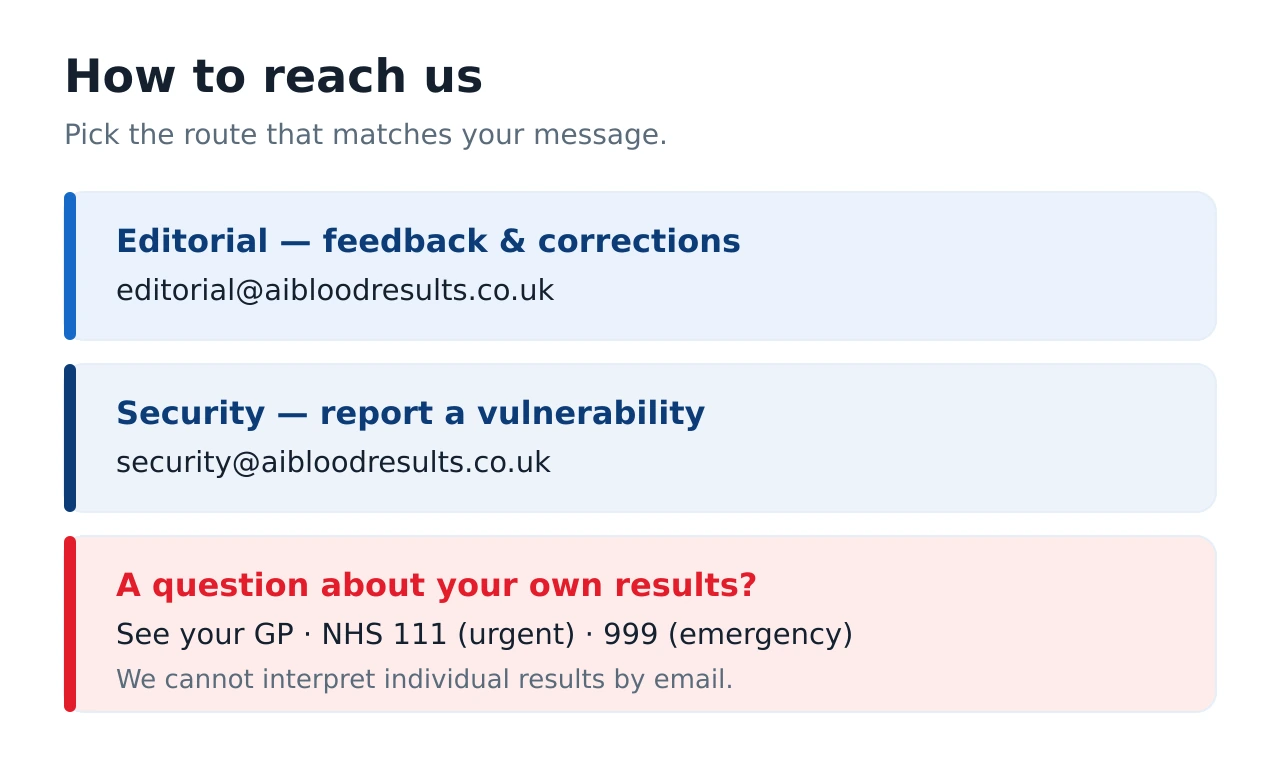
For feedback, corrections, source suggestions or general editorial questions, email editorial@aibloodresults.co.uk. This is the editorial team's official mailbox and the right address for almost everything. If you believe you have found a security issue with the website — for example a technical vulnerability — please write to security@aibloodresults.co.uk instead, so it reaches the right people quickly. We welcome responsible disclosure and will acknowledge genuine reports.
What we can help with
We take every thoughtful, on-topic message seriously. The most useful emails we receive tend to be about:
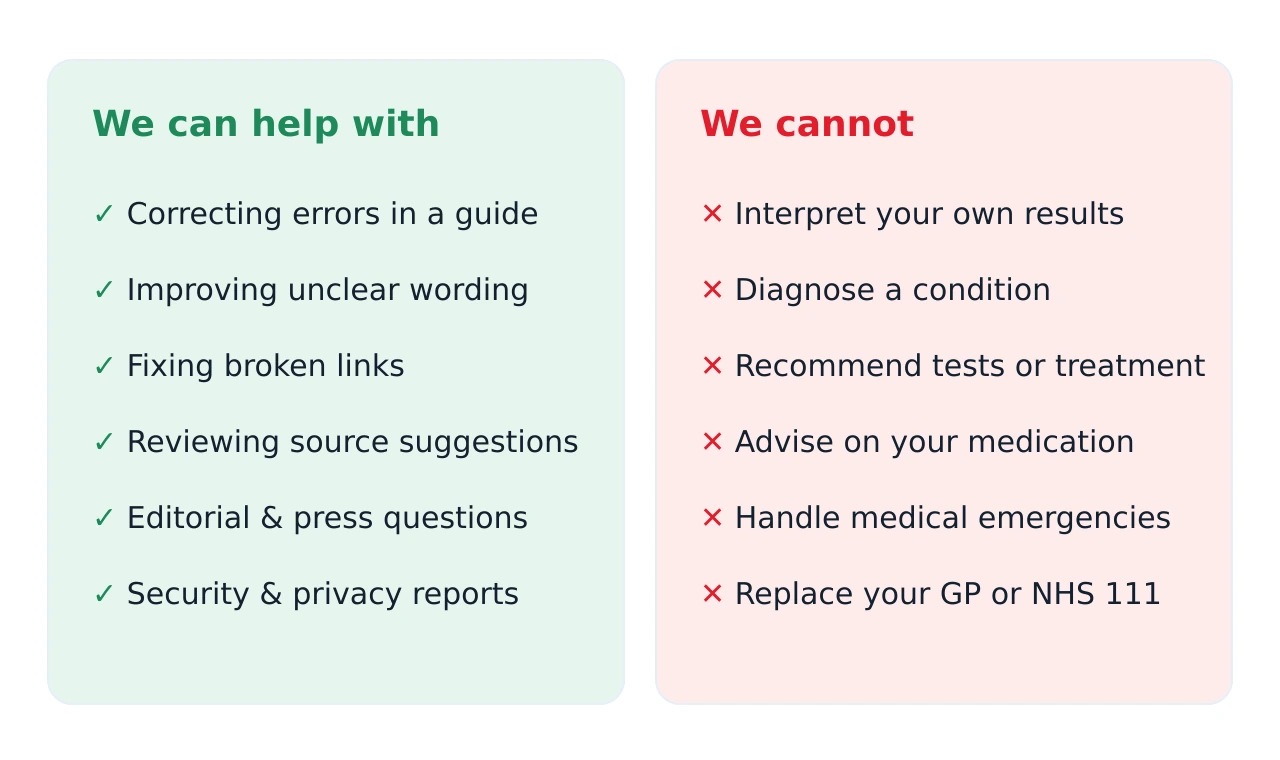
- Corrections: if you think a guide contains an inaccuracy, an out-of-date figure or wording that is hard to follow, please tell us. We check and, where needed, update the page.
- Source suggestions: if you know a reliable, publicly available UK or international clinical source we should reference, we would love to hear about it. We verify sources before we cite them.
- Broken links or technical snags: a heads-up about anything that is not working helps us keep the site useful for everyone.
- Editorial and press questions: for collaboration or media enquiries, the editorial address is the right place to start.
If you are writing about a specific article, it speeds things up if you include the page title or link. If your question is about which tool to use to review a report, our comparison of AI blood-test analysers may already answer it before you write.
What we cannot help with
One thing is important, and we want to be completely clear about it: we cannot interpret your individual results or give you medical advice. We will not tell you what a specific value means for you, and we cannot recommend a test, a medicine or a treatment. This is not unhelpfulness — it is patient safety. Blood results can only be interpreted properly alongside your full history and an examination.
What to expect after you write
We aim to reply to every genuine, on-topic message, usually within a few working days. We are a small editorial team rather than a support desk, so please bear with us at busy times. When you write, a clear subject line and the relevant page title or link help us find the right context and respond accurately.
Please do not email us your blood test results or other sensitive health information. We cannot advise on them, and we would rather you did not share personal medical data with us at all. If you would like to understand your report, take it to your GP, or read the relevant guide in our library of plain-English explainers so you can have a better-informed conversation at your appointment. You can read how we look after the limited data we do handle in our privacy policy, and the boundaries of what our content is for in our medical disclaimer.